
Blog
The Crystal Ball of Medicine: AI in 2025 and Beyond
AI is revolutionizing medicine by predicting diseases years before symptoms appear, shifting healthcare from reactive treatment to proactive prevention—and unlocking a future where early intervention can save lives and reduce global healthcare costs.
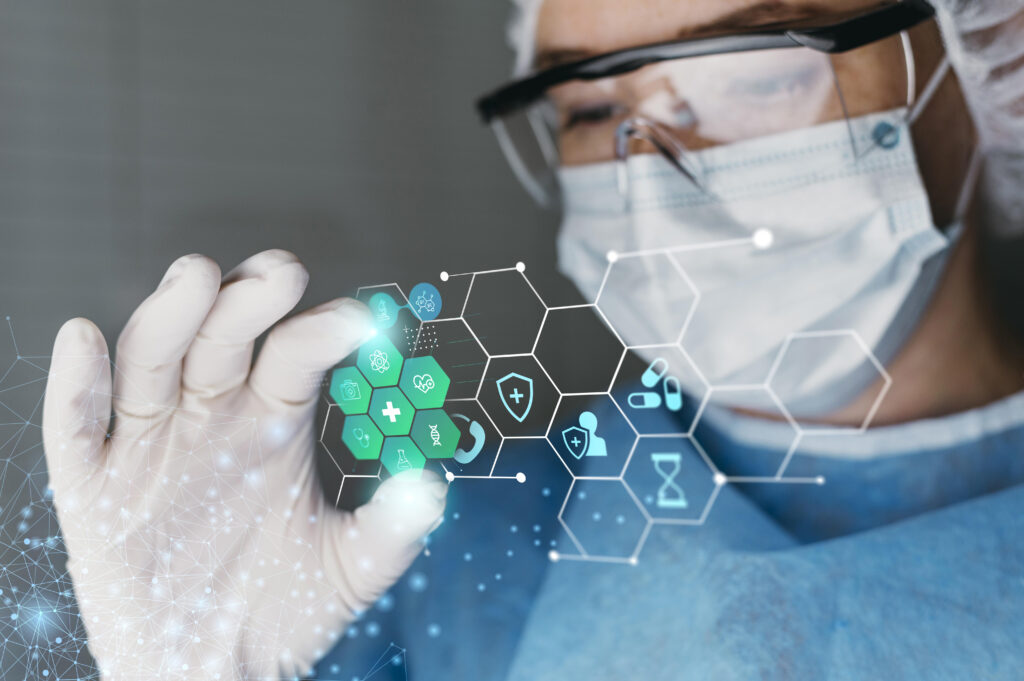
The Crystal Ball of Modern Medicine: How AI Is Reinventing Predictive Healthcare
Imagine discovering you’re at high risk for pancreatic cancer three years before any symptoms emerge—and having the tools to prevent it entirely. By 2025, this vision is rapidly becoming a reality. Artificial Intelligence (AI) is transforming modern medicine, using vast streams of data—ranging from blood tests and speech patterns to wearable devices and lifestyle habits—to predict diseases with remarkable accuracy. Welcome to the era of predictive healthcare.
How AI Uncovers Hidden Health Risks
AI’s strength lies in its ability to merge diverse datasets and uncover patterns invisible to the human eye. It can detect subtle genomic mutations (like tumor DNA in the blood), track changes in biomarkers, and even interpret shifts in voice or language that may hint at neurological changes. By combining data from wearables—such as sleep cycles or heart rate—with environmental factors like air quality, AI builds a comprehensive health profile to identify early signs of disease.
A powerful real-world example: An AI model flagged the risk of Alzheimer’s disease seven years before symptoms appeared by analyzing changes in speech patterns and retinal scans, enabling early intervention and therapy.
Key Predictions AI Will Make in 2025
AI’s predictive capabilities are not limited to one or two conditions—it’s revolutionizing diagnostics across the board. In cancer detection, for example, AI can identify tumors as small as 1mm in CT scans, leading to a 40% increase in early detection, according to Stanford’s 2024 findings. For Alzheimer’s, AI is combining retinal imaging and voice analysis with 89% accuracy, identifying the disease long before symptoms manifest.
Other use cases include:
Diabetes: AI can detect signs from smartphone images of eyelids, boasting 92% accuracy, rivaling traditional blood tests (MIT).
Heart Attacks: By integrating ECG data from wearables with stress biomarkers, AI can predict cardiac events six months in advance.
Depression: Using behavioral signals like typing speed and language use, AI models have achieved 85% accuracy in early identification (Kintsugi).
The Technology Powering Predictive Health
This revolution is powered by several key technologies. Multimodal AI blends various data types—imaging, genomics, behavioral cues—for richer analysis. Federated learning allows AI to train across multiple hospitals without compromising patient privacy. Explainable AI helps physicians understand the rationale behind each flagged risk. Meanwhile, edge computing enables real-time processing directly on local devices, reducing the need for cloud infrastructure.
Real-World Impact on Care and Costs
The potential of predictive healthcare is not just scientific—it’s financial and global. Early cancer detection can reduce treatment costs by up to 80%. In regions like Nigeria, solutions like MamaLook allow users to submit breast lump photos for instant analysis via smartphones. In India, AarogyaAI is diagnosing tuberculosis from cough sounds alone.
With earlier identification comes preventive therapy, where at-risk patients receive medications or lifestyle interventions before disease takes hold—shifting the paradigm from treatment to prevention.
Overcoming Key Challenges
However, challenges remain. Bias in training data is a major issue, with over 80% coming from high-income, white populations. This can lead to misdiagnoses in underrepresented groups. Innovators like DiverseHealth are building more inclusive datasets to address this gap.
Overdiagnosis—or too many false positives—can overwhelm healthcare systems. To mitigate this, emerging tools like Clinical AI Guardians prioritize only high-risk cases. Meanwhile, data ownership is becoming more transparent through blockchain-secured health vaults, giving individuals control over their personal data.

What the Future Holds (2030+)
Looking beyond 2025, predictive health will continue to evolve. AI Health Avatars could simulate an individual’s biology to test treatments virtually. Quantum AI may model protein interactions to predict autoimmune conditions. Home-based eDNA monitors could detect local pathogen threats in real time through air and water samples.
As Dr. Anya Sharma, WHO Digital Health Lead, says:
“67% of patients want to know future health risks — if they can prevent them.”
Why It Matters for Innovators and Startups
This rapidly evolving space presents enormous opportunities. The predictive health AI market is projected to exceed $50 billion by 2027 (Precedence Research). Startups can target niche areas such as rare disease predictors, create bias-auditing tools for regulators, or develop low-cost diagnostics for emerging markets using everyday devices like smartphones.
Conclusion: From Sick Care to Forecast Care
AI is moving healthcare from a reactive model to a proactive one—from treating illness to forecasting and preventing it. While ethical and logistical challenges persist, the possibilities are transformative. Millions of lives could be saved, not through treatment, but through the power of anticipation. After all, the best treatment is the one you never need.